
The trousseau: from embroidered linen to a modern bridal wardrobe
Once a chest of linen and lace prepared over years, today a small and treasured collection. How the trousseau began, and how to build one that lasts.
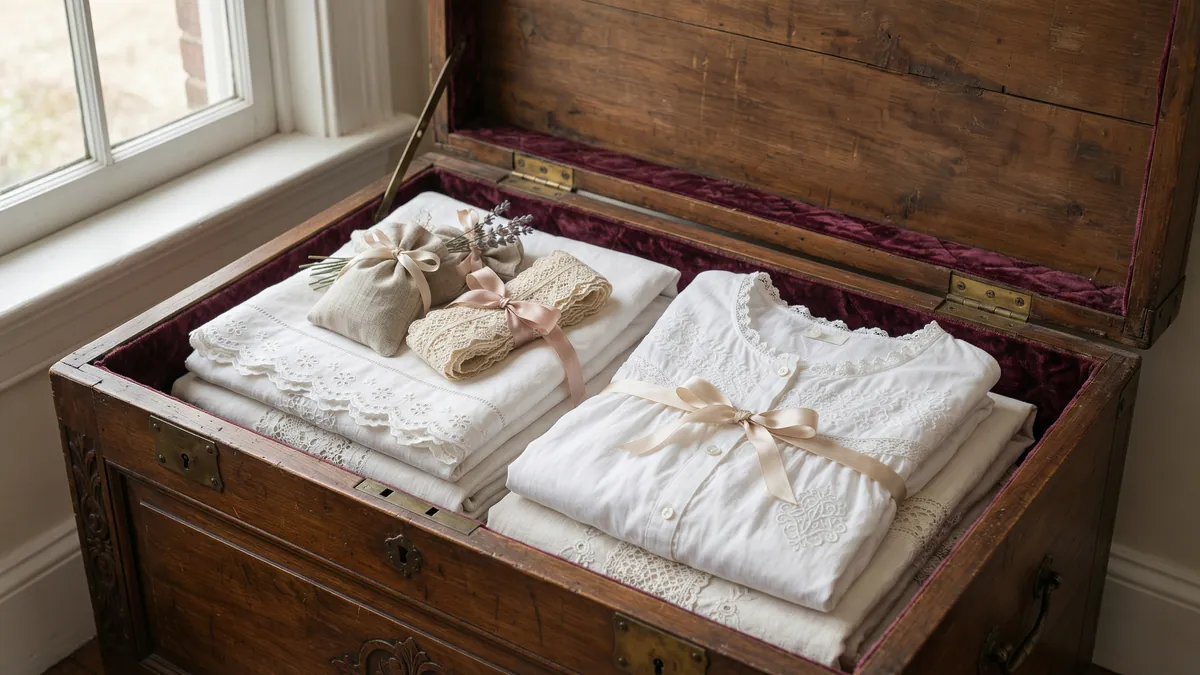
Lift the lid of an old linen chest and the first thing you notice is the scent: dry cedar, clean cotton, a trace of lavender. Inside, folded with care, lie pillowcases with drawn thread borders, a nightgown with a deep lace yoke, a set of napkins each worked with the same two initials. Someone spent many evenings on these. A trousseau was never only a collection of things. It was time, skill and hope, gathered slowly and handed over at a wedding.
What a trousseau was
The word trousseau comes from the French trousse, a bundle. It described the collection of clothes, linen and household textiles that a bride brought into her marriage, often prepared over many years by the bride and her family. A trousseau could include embroidered bed linen, tablecloths and towels, nightgowns, petticoats and underwear, frequently finished with hand embroidered monograms. Pieces were sewn, collected and laid away as the years passed, so that a young woman might arrive in her new home with linen to last a lifetime.
Related customs exist in many places. In English speaking countries the hope chest, or bottom drawer, held the same kind of treasures, and in many cultures the dowry carried goods, textiles and wealth into a new household. The details differed, but the idea of preparing for a shared life through things made by hand was remarkably widespread.
Lingerie in the trousseau
In the nineteenth and early twentieth century, fine lingerie was an important part of the trousseau. Most of it was white: crisp cotton batiste, smooth linen, lawn so fine it was almost translucent. Decoration came from lace trims at the neckline and hem and from whitework embroidery, white thread on white fabric, worked in satin stitch, eyelets and delicate openwork. A nightgown might carry a yoke of tucks and lace insertion, a petticoat a deep flounce, a chemise a small monogram at the breast.
These pieces were made to be washed, starched and worn for years. That is why so many survive today, slightly yellowed perhaps, but sound, folded into drawers and boxes by families who could not bear to part with them. Run a fingertip over old whitework and you feel the satin stitch standing proud of the cloth, firm and even after generations of laundering.
A trousseau was never only a collection of things. It was time, skill and hope, gathered slowly and handed over at a wedding.
A modern trousseau
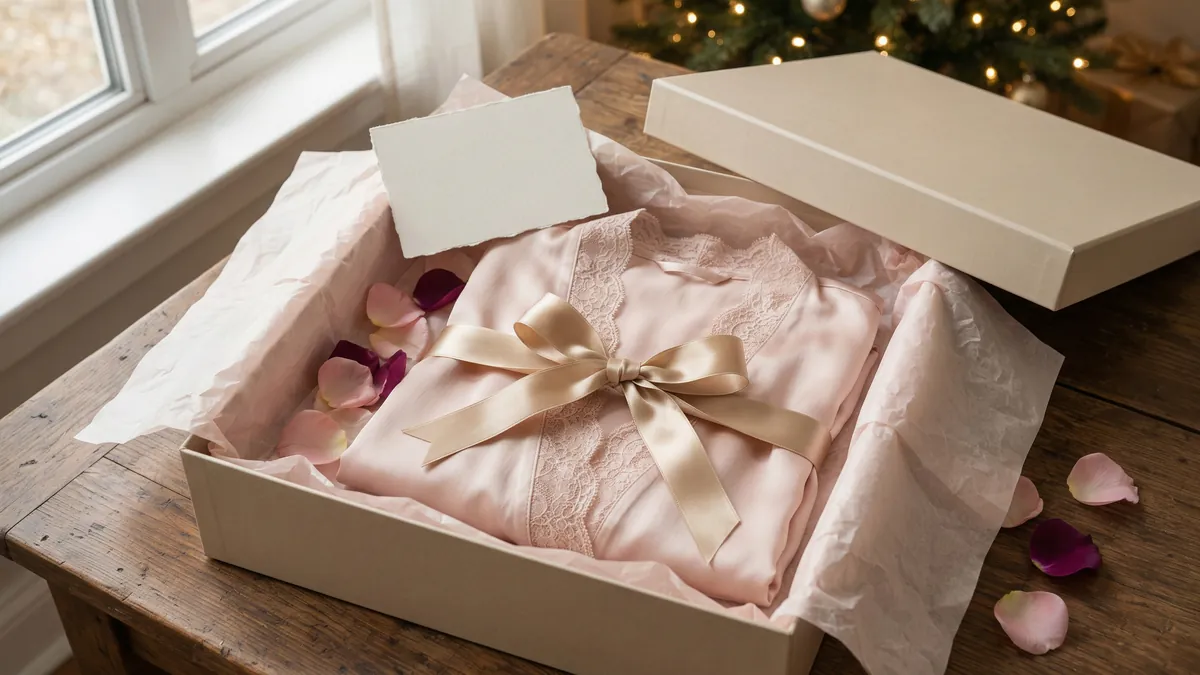
Today few people prepare chests of tablecloths, but the idea translates beautifully. A modern trousseau can be a small, carefully chosen lingerie and nightwear wardrobe for a new life together, assembled by anyone who is marrying, for themselves or with a partner. Rather than quantity, it is about pieces you will treasure.
- A few heirloom quality pieces in silk and lace, such as a slip, a nightgown or a set you will keep for anniversaries.
- A monogrammed robe in silk, cotton or linen, worn on slow mornings for years.
- Embroidered initials and the wedding date, stitched discreetly inside a garment or on a handkerchief.
- Something passed down from a mother, grandmother or another relative, restored by a seamstress so it can be worn again.
- Fine bed linen, if you like the traditional idea, with a simple monogram.
Choosing pieces that last
An heirloom begins as a well made garment. Look first at the fabric: silk of good weight, such as a charmeuse or crêpe de chine that feels substantial and cool rather than thin, fine cotton batiste or linen, and lace with a crisp, clear motif. Then look at the construction. French seams that enclose the raw edges, lace applied by hand or with fine stitching, and generous seam allowances that allow later alterations are all signs of care.
Choose classic shapes over passing trends. A bias cut slip, a long nightgown with a simple neckline, a wrap robe: these have been worn for generations and will still look right in thirty years. Colours such as ivory, soft white, champagne and pale grey age gracefully, and they suit embroidery well. Washing by hand in lukewarm water, about 30 °C, and drying flat away from the sun will do more for their life than any other habit.
Keeping heirlooms
Textiles last longest when they are clean, dry, dark and able to breathe. Light yellows white cotton and fades silk, plastic traps moisture, and folds held for years can weaken fibres along the crease.
| Care step | Why it matters |
|---|---|
| Wash or clean before storing | Traces of skin oils and perfume yellow fabric over time. |
| Wrap in acid free tissue paper | Ordinary tissue and cardboard release acids that stain. |
| Store in a cotton bag or box | Cotton lets the fabric breathe; plastic traps moisture. |
| Keep away from light | Daylight yellows cotton and fades silk. |
| Refold every year or two | Moving the folds stops fibres weakening along one line. |
| Pad the folds | A roll of tissue in each fold softens the crease. |
For very old or fragile pieces, a textile conservator can advise on cleaning and storage.
When an old piece is to be worn again, take it to an experienced seamstress first. They can replace perished elastic, secure loose lace and strengthen weak seams, often with fine silk thread, without changing the character of the original.
A tradition worth keeping
The heart of the trousseau was never about owning a great deal. It was about care: choosing well, making by hand, keeping things carefully and passing them on. A single silk nightgown with your initials, a robe worn on the morning after, a slip that once belonged to your grandmother: these carry the same meaning as a chest full of linen. One day, perhaps, someone will lift a lid and find them.
Questions and answers
What is the difference between a trousseau and a dowry?
A trousseau is the collection of clothes, linen and household textiles a bride brings to her new home. A dowry, found in many cultures, is a wider transfer of goods or wealth into the marriage.
What is a hope chest?
In English speaking countries, the hope chest or bottom drawer was where linen, lingerie and household pieces were gathered over the years before a wedding.
Can I wear my grandmother’s nightgown or slip?
Often, yes. Ask a seamstress to check the seams, lace and elastic first. Old elastic usually needs replacing, and weak areas can be strengthened gently.
How should I store silk and lace heirlooms?
Clean, wrapped in acid free tissue paper, in a cotton bag or box, away from light. Refold them every year or two to rest the creases.
Further reading in our network
- RoyalnisRoyal lifestyle
Royal weddings and court traditions, including historic bridal wardrobes.
- FalianaLuxury, examined
Luxury examined: craft, maisons and the history of fine textiles and embroidery.
Our articles are general information written with care. Sizes and conversions are guide values that differ between makers; for health questions please talk to a doctor or midwife.