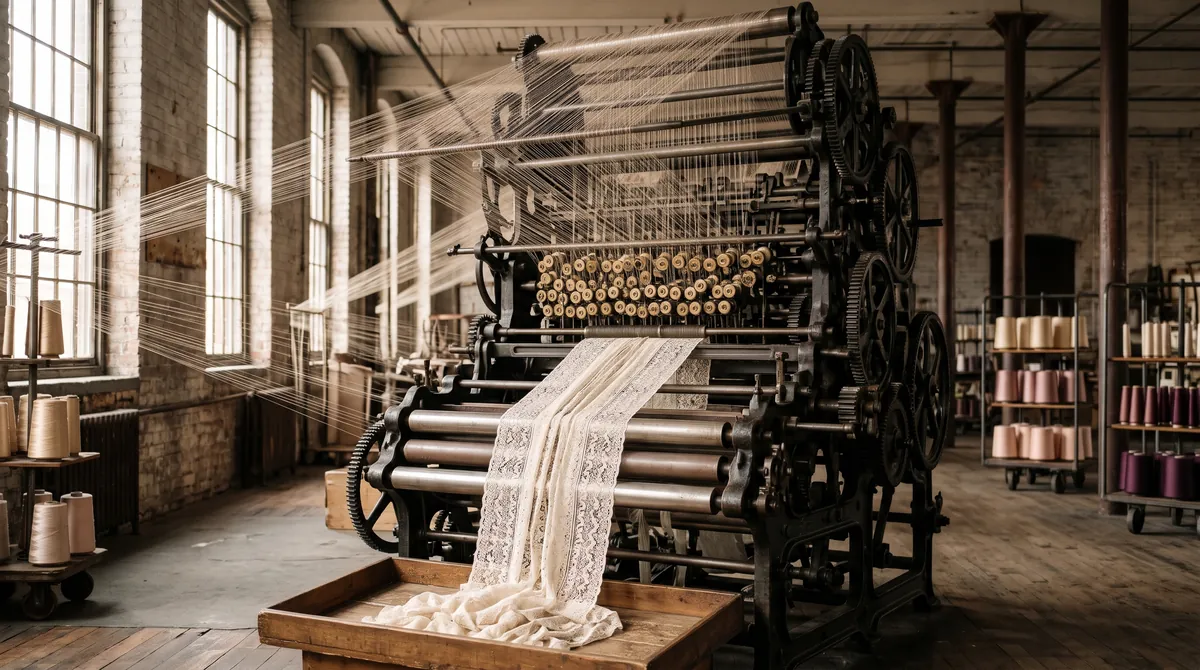
Inside the atelier: how a lace bra is made
Twenty or more small pieces, lace cut along its flowers, motifs sewn by hand onto tulle: a quiet look at the work behind a well made bra.
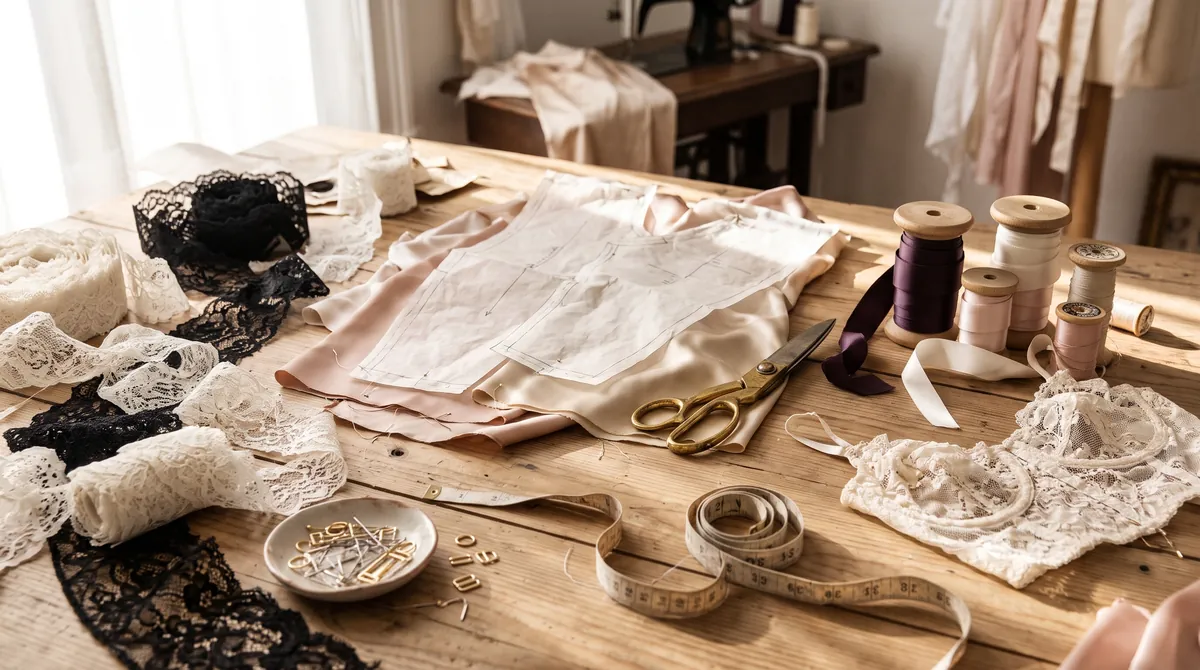

Section 01
Threads, looms and the feel of fine fabric
Every beautiful piece of lingerie begins with a fabric. Here we follow lace from the slow Leavers looms of northern France to the needle lace of Alençon, explain what momme means on a label of silk, compare cotton, modal and tulle, and show you how to wash and keep fine pieces so that they last for years.
Twenty or more small pieces, lace cut along its flowers, motifs sewn by hand onto tulle: a quiet look at the work behind a well made bra.
More from Lace & Silk
A basin of cool water, a gentle detergent and a towel: the calm habits that keep lace soft, silk lustrous and elastic doing its job for years.
From the cotton gusset to the spacer fabric in a moulded cup: what each lingerie fabric does, how it feels, and how to read a label before you buy.
Why silk feels cool one moment and warm the next, what the weaves are called, and how a small unit named momme tells you more than any label adjective.
Bobbin lace, needle lace, guipure and embroidered tulle: a calm guide to the great lace families, and to how their names live on in lingerie today.
Huge machines, thousands of threads and a patience that cannot be hurried: why Leavers lace still feels different from almost anything else on a cup or a hem.
In this section
Browse all five sections on the home page, or let the style finder suggest where to start.
Other sections