Silk pyjamas: what to look for in a classic set
A good silk pyjama set is a quiet piece of tailoring for the night. Here is how to read the fabric, the seams and the cut before you choose one.
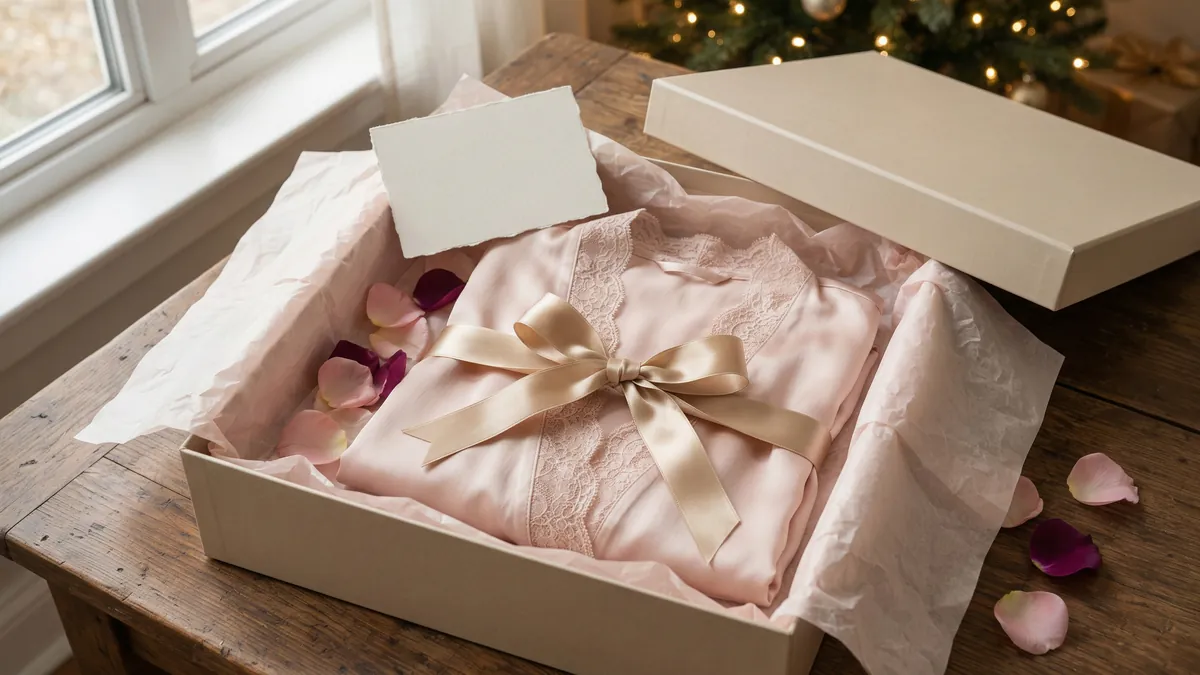
Lift a well made silk pyjama shirt from its tissue paper and the first thing you notice is weight. Not heaviness, but a cool, liquid drop as the fabric falls from your hands and settles over the back of a chair. The collar holds its shape, the piping runs in one clean line from shoulder to hem, and the buttons click softly against each other. A classic set is a small piece of tailoring made for the night, and once you know what to look for, the difference between a lovely set and a disappointing one becomes easy to see.
The anatomy of a classic set
The traditional pyjama has changed very little in a century. The shirt has long sleeves, a notch collar or a revere collar that lies open and flat, a row of buttons down the front and usually a single chest pocket. Contrast piping often traces the collar, cuffs, pocket and front edge, which gives the set its finished, slightly formal look. The trousers are long and straight, with an elastic or drawstring waist so they sit comfortably without a fly or a zip.
For warm months there is the short set: a camisole or short sleeved shirt with matching shorts. It follows the same rules of fabric and finish, simply with less cloth. Many people keep one long set and one short set, and rotate them with the seasons.
The word itself has travelled far. Pyjama comes from Hindi and Persian, from pāy jāma, meaning a leg garment. It reached Europe through British India in the nineteenth century, when loose trousers worn for comfort were adopted at home and slowly became the matching sleepwear set we know today.
Charmeuse, satin or crêpe de Chine
The fabric decides how a set looks, feels and lives with you. Silk charmeuse is the classic choice: one side has a soft lustre, the other a matt, slightly grainy back. It drapes beautifully and catches the light along every fold. Satin is a weave rather than a fibre, so a satin pyjama can be silk or a synthetic; read the label to know which one you are holding. Crêpe de Chine has a fine, pebbled surface and a gentle matt glow. It creases less than charmeuse, feels a little drier against the skin and is often the more practical choice for travel.
Silk is measured in momme, a traditional unit of weight. For pyjamas that will be worn and washed often, roughly 19 to 22 momme is a good guide: substantial enough to last, light enough to stay airy. Lighter silks feel delicate and pretty, but they wear through faster at the seat, the elbows and the knees, which are the places a pyjama works hardest.
| Fabric | Look and feel | Best for |
|---|---|---|
| Silk charmeuse | Glossy face, matt back, fluid drape | A classic, elegant set |
| Crêpe de Chine | Matt, finely textured, fewer creases | Travel and everyday wear |
| Washed silk | Soft, sueded, relaxed | Easy care and a lived-in look |
| Cotton poplin | Crisp, cool, breathable | Warm nights and frequent washing |
| Modal | Smooth, soft, light stretch | Everyday comfort and easy washing |
Momme weights are a guide; the weave and finish matter as much as the number.
Quality you can see and feel
Turn the shirt inside out before anything else. The inside tells you how much care went into the outside. French seams enclose the raw edges completely, so nothing frays and nothing scratches. Neat, narrow overlocked seams are also fine, as long as the stitching is even and the thread matches. Then look at the details that are hard to fake.
- A generous cut. Silk does not stretch, so the shirt needs room across the back and the trousers need room at the seat and thigh.
- Buttons with character. Real mother of pearl has a soft, shifting shimmer and feels cool; covered buttons in the same silk are equally elegant.
- Piping sewn evenly. It should run straight without puckering, and meet neatly at the corners of the collar and pocket.
- Enough length. Trousers should reach the ankle when you sit, and sleeves should reach the wrist when your arms are bent.
- A gusset in the trouser seam. A small diamond of fabric where the legs meet gives freedom of movement and protects the seam from strain.
- Pattern matching. On printed silks, stripes and motifs should line up across the front and at the pocket.
The inside of a pyjama tells you how much care went into the outside.
Finding the right fit
A pyjama should be loose enough to sleep in and to lounge in, yet tidy enough that you feel dressed. Reach your arms forward as if holding a book: the shirt should not pull across the shoulder blades, and the sleeves should not ride up towards the elbow. Sit down and cross your legs: the trousers should not tighten at the knee or creep up the calf. If you are between sizes, the larger one is usually kinder, because silk relaxes very little and a set that is a touch too snug will strain at the seams.
Silk has another quiet advantage. It helps regulate temperature, feeling cool when you first slip into bed and comfortable as the night goes on, and its smooth surface is something people with sensitive skin often enjoy. If you run very warm, a short set or a lighter crêpe de Chine may suit you better than heavy charmeuse.
Gentle care at home
Silk pyjamas are less fragile than their reputation, provided you treat them kindly. Always check the care label first, then follow a simple routine.
- Wash by hand in cool water, or on a delicate cycle inside a mesh bag, using a mild detergent made for silk or wool.
- Do not wring. Press the water out gently, then roll the garment in a clean towel.
- Dry flat or on a padded hanger in the shade, away from radiators and direct sun, which can fade colour and weaken the fibre.
- Iron on a low setting on the reverse side while the silk is still very slightly damp, or use a cloth between iron and fabric.
- Store folded in a drawer or on a padded hanger, away from perfume and deodorant, which can mark the fibre.
Beyond the bedroom
A beautiful pyjama shirt has a life outside the night. Worn with tailored trousers and a structured blazer, a silk shirt with piping looks relaxed and quietly polished, and pyjama trousers can pair with a fine knit and flat shoes. The trick is contrast: one soft piece balanced by something crisp. Keep the set you wear out separate from the one you sleep in, so the daywear version stays fresh and free of creases.
Washed silk, cotton poplin and modal are good alternatives if pure charmeuse feels too precious. Washed silk has a soft, sueded handle and forgives a little neglect; poplin is crisp and cool for warm climates; modal is smooth, light and easy to wash. Each brings its own pleasure, and the same quality signs apply to all of them.
Questions and answers
Is satin the same as silk?
Not always. Satin describes a weave with a glossy face, and it can be made from silk or from synthetic fibres. The label will tell you which, and silk satin feels cooler and breathes better.
Can I put silk pyjamas in the washing machine?
Many can go on a delicate or silk cycle in cool water inside a mesh bag, but check the care label first. Use a mild detergent and skip the spin if your machine allows it.
Which size should I choose?
Silk has almost no stretch, so choose the size that leaves comfortable room across the back, seat and thighs. Between two sizes, the larger one usually feels better for sleeping.
Why do my silk pyjamas look dull after washing?
Hard water, too much detergent or hot water can dull the lustre. A cool rinse with a splash of white vinegar and a gentle press on the reverse often brings the gloss back.
Further reading in our network
- LaxaryLuxury lifestyle
Luxury lifestyle stories about fine materials, beautiful homes and the art of living well.
- RonestaWomen’s lifestyle
Women’s lifestyle with ideas for everyday style, home and well-being.
Our articles are general information written with care. Sizes and conversions are guide values that differ between makers; for health questions please talk to a doctor or midwife.