Building a lingerie wardrobe: the essentials and the treasures
A good lingerie drawer is not a large one. It is a calm collection of pieces that fit, work under your clothes and are a pleasure to wear, with a few treasures kept for the moments that deserve them.
Most of us know the feeling of a full drawer with nothing to wear. A bra that only works under one dress, briefs that roll at the waist, a lace set bought for an occasion and never worn since. A thoughtful lingerie wardrobe works the other way round. Each piece has a purpose, fits the body you have today and is cared for so it lasts. It does not need to be large. It needs to be chosen.
The essentials
Think of the essentials as the foundation that makes the rest of your clothes work. They are not glamorous, but they are worn more than anything else in the drawer, so they deserve the best fit and fabric you can choose.
- A smooth t-shirt bra in a skin tone close to yours. It disappears under thin and pale tops and will probably be your most worn piece.
- A second everyday bra in black for dark clothes and evenings.
- A strapless or multiway bra for off the shoulder, halter and other special necklines.
- A soft bra or bralette for home, travel and slow days.
- Briefs in several styles: seamless pieces for fitted trousers and dresses, cotton for everyday comfort.
- A slip for dresses and skirts that cling or are slightly sheer.
With these six types of piece you can dress for almost any day. If one is missing, you will usually notice it the moment you try on a particular outfit, which is a good way to find out what to add next.
The treasures
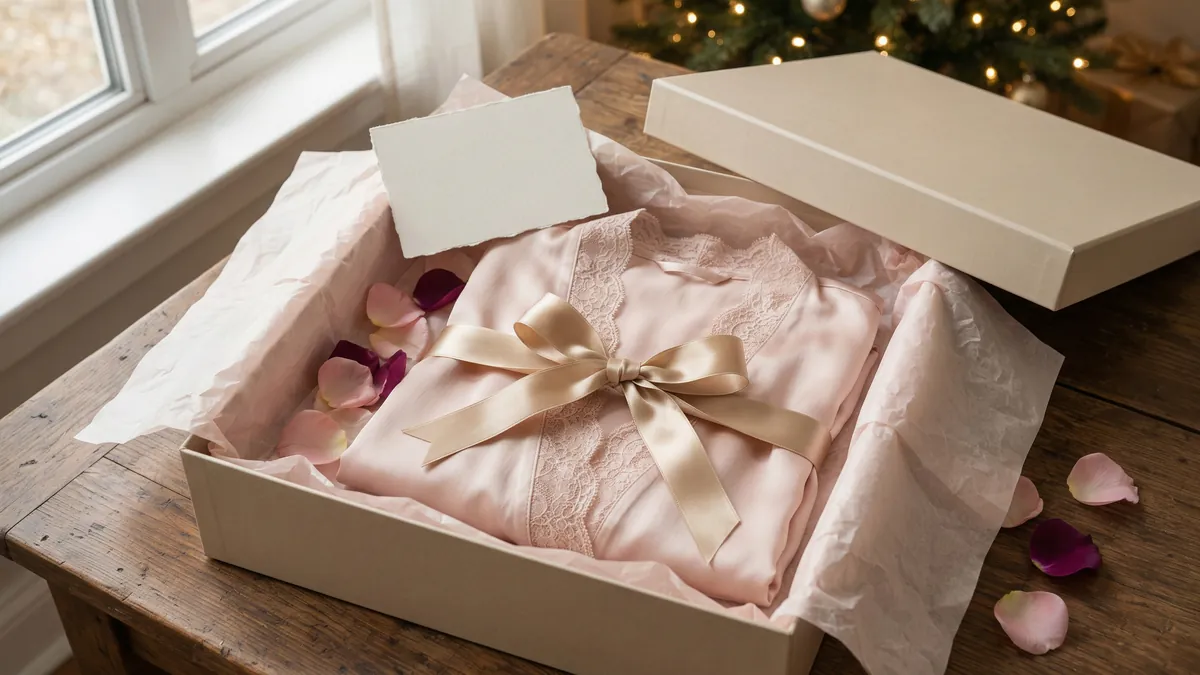
Treasures are the pieces that make you smile when you open the drawer. They are not needed every day, which is exactly why they can be more delicate. One or two beautiful lace sets, a silk camisole or slip, a robe that feels like a small ritual in the morning. Feel the cool weight of silk charmeuse, the relief of a lace motif under your fingertips, the softness of a well finished edge. Choose treasures slowly, because you will keep them for a long time.
A good lingerie wardrobe does not need to be large; it needs to be chosen.
How many pieces do you need?
There is no fixed number, but a common rule of thumb is to own several everyday bras so that you can rotate them, for example three to five. Elastic needs time to recover after a day of wear, and a bra that rests for a day or two between wears keeps its shape far longer. For briefs, plan for at least a week plus a few spares, so that laundry day never becomes urgent.
| Piece | A guide quantity | Why |
|---|---|---|
| Everyday bras | About three to five | Rotation lets the elastic rest and recover |
| Strapless or multiway bra | One | Needed for specific necklines |
| Soft bra or bralette | One or two | Comfort at home and when travelling |
| Briefs | At least seven, plus spares | A full week between washes |
| Slip | One or two | One skin tone, perhaps one black |
| Treasures | A few | Lace sets, a silk piece, a robe |
Guide values only. Your routine, climate and how often you wash will shape your own numbers.
Quality over quantity
Fewer, better pieces almost always serve you better than many quick buys. A well made bra has a firm band that holds its shape, elastic with a soft plush back, neat seams and hooks that close easily. Good briefs have a cotton gusset, a waistband that lies flat and leg openings that do not cut in. Cared for well, such pieces last much longer, and they feel better every single day you wear them.
A seasonal check
Twice a year, perhaps when you swap summer and winter clothes, take everything out of the drawer and look at it honestly. Ask three questions of each piece:
- Does it still fit? Bodies change with time, sport, pregnancy and hormones, and that is entirely normal.
- Does it need replacing? Look for a band that rides up even on the tightest hook, stretched straps, faded colour or tired elastic.
- What is missing? Think about the clothes you will wear next season and whether the drawer supports them.
Pieces that are still in good condition but no longer fit can go to a friend or a textile collection. Those that can be mended, such as a loose hook or a small tear in lace, can often be repaired by a skilled seamstress.
Shopping with care
Try lingerie on whenever you can, and consider a professional fitting, especially if you have not been measured in a while. Buy for the body you have today, not the one you had last year or imagine for next summer. Online, read the return conditions before you order, because lingerie often has limited returns for hygiene reasons. Keep the tags on until you have tried each piece at home under the clothes you plan to wear with it.
Organising the drawer
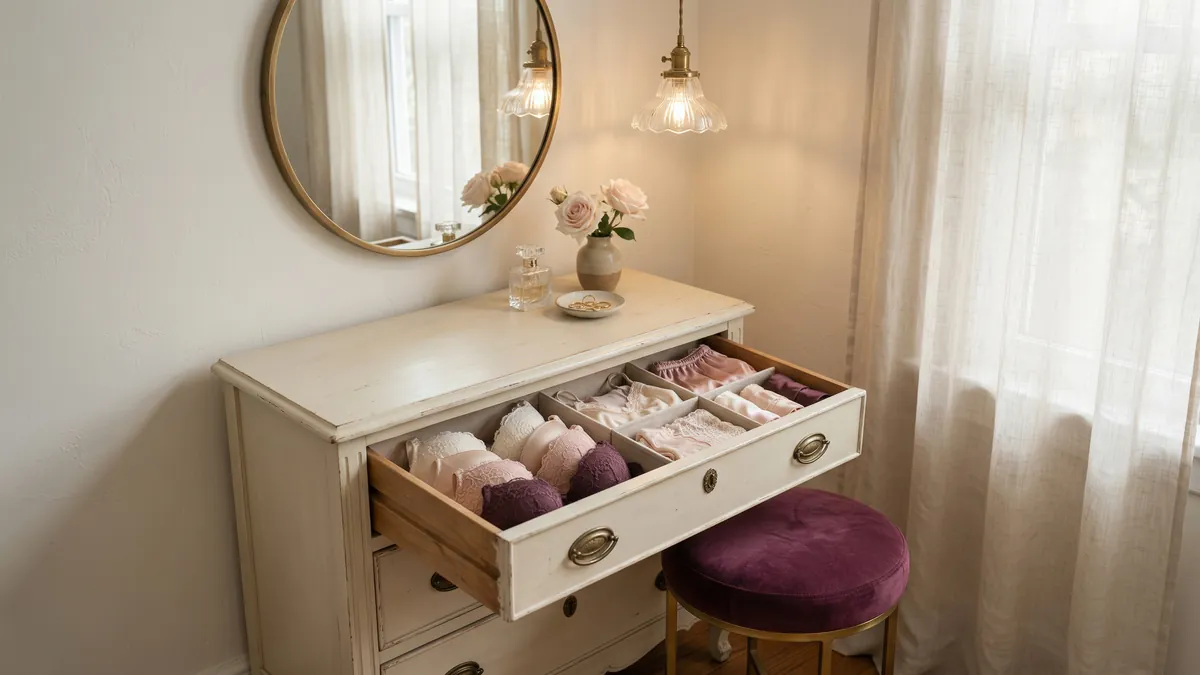
A tidy drawer protects your lingerie and saves time in the morning. Nest moulded bras one inside the other in a row, never folding one cup into the other, which creases the foam. Roll or fold briefs into small boxes or dividers. Keep everyday pieces at the front and treasures towards the back in fabric pouches, with silk on padded hangers. A sachet of lavender or cedar adds a gentle scent and keeps moths away from wool and silk.
Sustainable choices
The most sustainable bra is the one you already own and wear for a long time. Choose durable materials, wash gently and cool, rotate your pieces and repair what can be repaired. When you buy something new, buy it because it fills a real gap. Over the years, a lingerie wardrobe built this way becomes something quietly personal: a collection of pieces that fit you, suit your days and still feel lovely to wear.
Questions and answers
How many bras should I own?
A common rule of thumb is several everyday bras to rotate, for example three to five, plus a strapless or multiway bra and a soft bra. Rotation gives the elastic time to recover between wears.
How do I know when to replace a bra?
Replace it when the band rides up even on the tightest hook, the straps have stretched, the elastic feels tired or a wire has bent. Faded colour is another sign it has been well loved.
Is it worth paying for a professional fitting?
A fitting is a helpful starting point, especially if you have not been measured in a while or your body has changed. It shows you which sizes and styles to try.
How should I store moulded bras?
Nest them one inside the other in a row in the drawer. Never fold one cup into the other, because that creases the foam and spoils the shape.
Further reading in our network
- RonestaWomen’s lifestyle
Women’s lifestyle, with ideas for home, wellbeing and everyday elegance.
- GlamesiaFashion and beauty
Fashion and beauty, with style ideas for every season.
Our articles are general information written with care. Sizes and conversions are guide values that differ between makers; for health questions please talk to a doctor or midwife.