
Bridal lingerie: how to plan it around the dress
The dress comes first, the lingerie follows, and both should be settled before the fittings begin. A calm plan for a long and happy day.
There is a moment at the first fitting when the seamstress kneels with a pincushion at her wrist and asks, quite casually, what you will be wearing underneath. It is a small question with a long answer. The dress may be the piece everyone remembers, but the lingerie decides how it sits on your shoulders, how the bodice meets your ribcage and whether the satin falls in one clean line over the hips. Planned early, it disappears into the day. Planned late, it can unpick weeks of careful alterations.
Start with the dress, not the lingerie
Before you look at a single bra, look closely at the gown. Four details decide almost everything. The neckline tells you whether straps can show and how low the centre of a bra must sit. The back matters just as much: a low back, an open back or an illusion back of fine tulle over skin all rule out an ordinary band. Then the fabric. Sheer lace lets shapes and colours through, a smooth satin shows every seam and edge beneath it, while a heavy crepe is more forgiving but clings at the hips. Finally, check what is already built in. Many bridal gowns have a structured bodice with boning and cups sewn into the lining, and in that case you may need far less than you think.
Ask your bridal consultant or seamstress to show you the inside of the dress. Feel the boning, look for cups, note where the seams run and where the zip or lacing sits. This tells you more than any photograph of the outside, and it gives you a clear brief when you begin to choose what goes underneath.
Why the timing matters
The most common mistake is buying lingerie a week before the wedding. A dress is altered to the body as it is at the fitting, and that includes everything you are wearing underneath. A strapless bra lifts the bust by a centimetre or two, a longline bustier draws in the waist, a seamless brief changes the line over the hips. If you arrive at the final fitting in a different set, the seamstress has adjusted the dress to something that is no longer there, and a bodice that fitted perfectly can suddenly gape or pull.
So choose your foundations before the main fittings begin, and wear exactly those pieces to every appointment. Bring the shoes too, since heel height changes posture and hem length. If a piece turns out to be wrong, change it early and tell the seamstress, so the next fitting can take it into account.
The seamstress fits the dress to the lingerie, so the lingerie has to arrive first.
Colour: closer to your skin than to the dress
It feels natural to wear white under a white gown, yet white is often the most visible choice. Light passes through lace and thin satin, and a bright white bra shows as a pale shape against a warmer ivory fabric. A tone close to your own skin, whatever that skin tone is, usually vanishes far better. Hold the fabric samples against your inner arm in daylight, not under shop lighting, and choose the shade that seems to disappear.
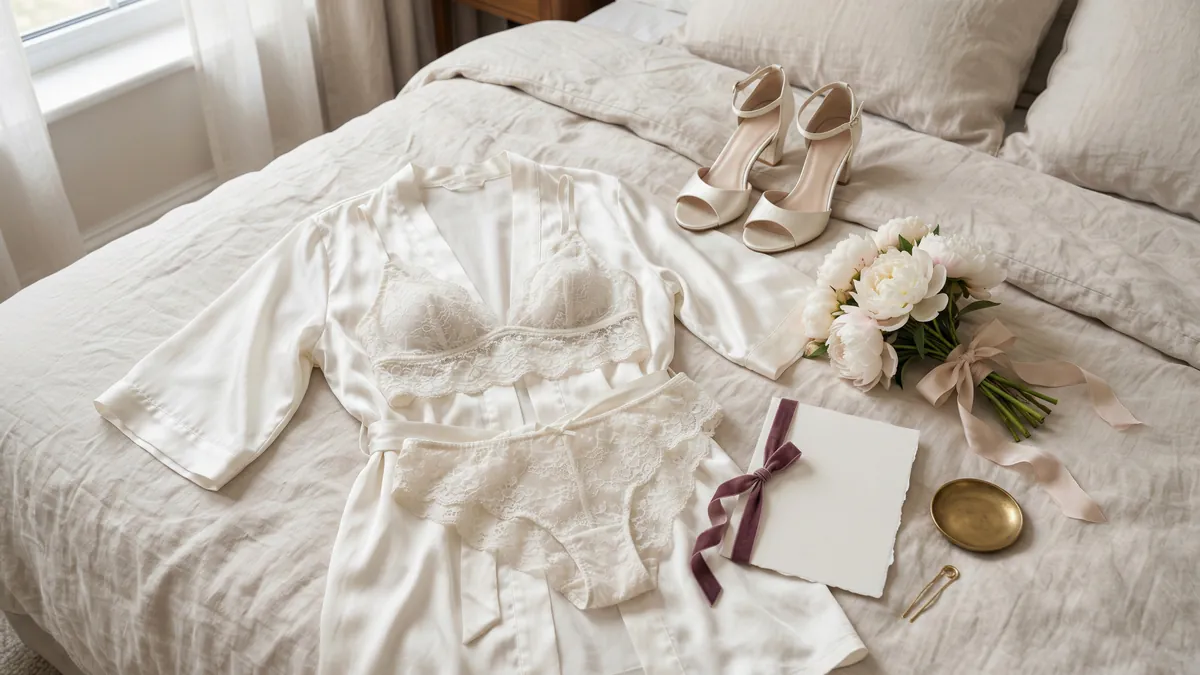
Ivory or white lingerie still has its place: for the moment after the dress comes off, when you might change into a second set or a robe that matches the day. Many people plan two sets for exactly this reason, one invisible and practical, one simply beautiful.
Comfort for a very long day
A wedding day can easily run to twelve hours or more, with standing, sitting through a meal, embracing friends and dancing long after the cake. What feels fine for ten minutes in a fitting room can press and rub by the evening. Wear every piece at home for a few hours before the day, ideally under a fitted top, and move around in it: sit, bend, lift your arms, climb stairs. Check for pressure points under the arms, at the centre of the band and along the leg openings. A strapless bra should stay put without you tugging at it, and a bustier should let you breathe deeply and eat a proper meal.
The options, piece by piece
- Strapless bra: a firm band and silicone grip along the top and bottom edges keep it in place. Choose it a little snugger than your usual band.
- Longline bustier: extends down the ribcage, spreads support over a wider area and smooths the waist under fitted bodices.
- Low back bra: a deep plunging band or a converter strap that wraps around the waist, for backs cut below the shoulder blades.
- Plunge bra: a low centre gore for deep V necklines, so nothing shows at the point of the V.
- Adhesive cups, or nothing at all: worth considering when the dress already has a supportive bodice and cups.
- Seamless briefs: laser cut or bonded edges that leave no line under satin and crepe.
- A slip: a smooth layer in silk or a fine synthetic that helps the dress glide and stops lace catching on skin.
- A garter: purely traditional, worn for meaning rather than function.
- Stockings or bare legs: a matter of season, shoes and personal taste. Sheer hold ups with a silicone top are the simplest option.
Whoever is getting married, and whatever they wear, the principle is the same: the pieces underneath should do their work quietly and let you forget about them. That holds for a gown, a jumpsuit or a tailored suit alike.
A second set and a small emergency kit
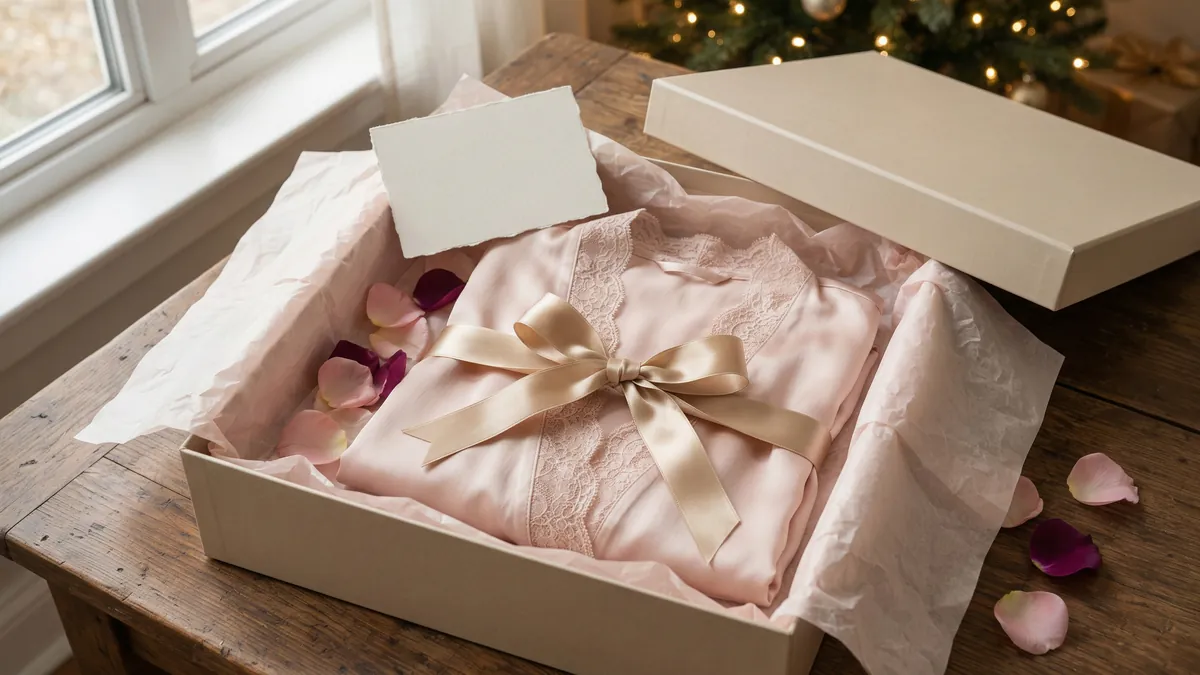
The evening often brings a change: a lighter dress for dancing, a jacket taken off, or simply the relief of slipping out of a structured bodice. A second set in ivory, champagne or any colour you love makes that moment feel like part of the celebration. Pack it with tissue paper in a small box or pouch, so the lace arrives uncrushed.
Ask a trusted friend to carry a little emergency kit. It weighs almost nothing and solves most small crises of the day.
- A few safety pins in different sizes
- Double sided fashion tape for straps and necklines
- A small sewing kit with ivory, white and skin toned thread
- Spare adhesive cups if you are wearing them
- A pair of seamless briefs, just in case
A planning list by months
| When | What to do |
|---|---|
| Nine to six months before | Choose the dress. Look closely at neckline, back, fabric and built in support. |
| Six to four months before | Choose bridal foundations with the dress in mind and buy them before the first fitting. |
| Four to two months before | Wear the same lingerie to every fitting, together with your wedding shoes. |
| Six to four weeks before | Wear the full set at home for several hours. Choose a second set for the evening. |
| Two weeks before | Final fitting in the same pieces. Assemble the emergency kit. |
| The day before | Lay everything out, wrapped in tissue, with the kit beside it. |
Guide values only: bridal salons and seamstresses work to their own schedules, so ask about yours early.
Questions and answers
Do I need a bra if my dress has cups built in?
Often not. Many bridal gowns have boning and cups sewn into the bodice, which give enough support on their own. Try the dress without a bra at the first fitting and ask the seamstress; adhesive cups or a seamless brief may be all you need.
Should bridal lingerie be white?
Under the dress, a shade close to your skin is usually the least visible choice, because white can show through lace and thin satin. White or ivory works beautifully for a second set after the ceremony.
When should I buy my wedding lingerie?
Before the main dress fittings begin, usually a few months ahead. The seamstress adjusts the dress to what you wear underneath, so changing pieces late can alter the fit.
What if I am marrying in a suit?
The same principles apply. Look at the neckline, the fabric and how close the cut sits to the body, then choose seamless or visible pieces accordingly, such as a fine body or a bralette under an open jacket.
Further reading in our network
- GlamesiaFashion and beauty
Fashion and beauty for the whole wedding look, from hair and make up to shoes and accessories.
- RoyalnisRoyal lifestyle
Royal weddings, court ceremonies and the traditions that shaped bridal style.
Our articles are general information written with care. Sizes and conversions are guide values that differ between makers; for health questions please talk to a doctor or midwife.