
Something old, something blue: bridal traditions and their roots
An old English rhyme, a blue ribbon stitched into a hem, a garter kept in a drawer: how bridal customs began and how to make them your own.
Somewhere in many wedding preparations there is a small envelope or a tissue wrapped parcel: a grandmother’s handkerchief, a borrowed pair of earrings, a ribbon in a particular shade of pale blue. None of them will be seen by most guests, and that is rather the point. Bridal traditions often live in the quiet details, close to the skin, carried for meaning rather than for show. The best known of them all comes from an old English rhyme that many people can recite without ever having learnt it.
An old English rhyme
The verse runs: “Something old, something new, something borrowed, something blue, and a silver sixpence in her shoe.” It is an English tradition recorded in the nineteenth century, during the Victorian era, when many of the customs we now think of as timeless wedding rituals took their familiar shape. Like most folk sayings, it was passed from one family to the next long before anyone wrote it down, and each household gave it its own flavour.
What makes the rhyme so enduring is its modesty. It asks for nothing grand: no particular dress, no expense, only a handful of small objects chosen with thought. Anyone can follow it, in any kind of wedding, and it adapts easily to families and cultures far from Victorian England.
What each line is said to mean
The meanings usually given are simple and rather lovely, though they vary a little from source to source.
| Line | Meaning usually given | Ideas today |
|---|---|---|
| Something old | Continuity with the past and the family | A grandmother’s brooch, a piece of heirloom lace, an old handkerchief |
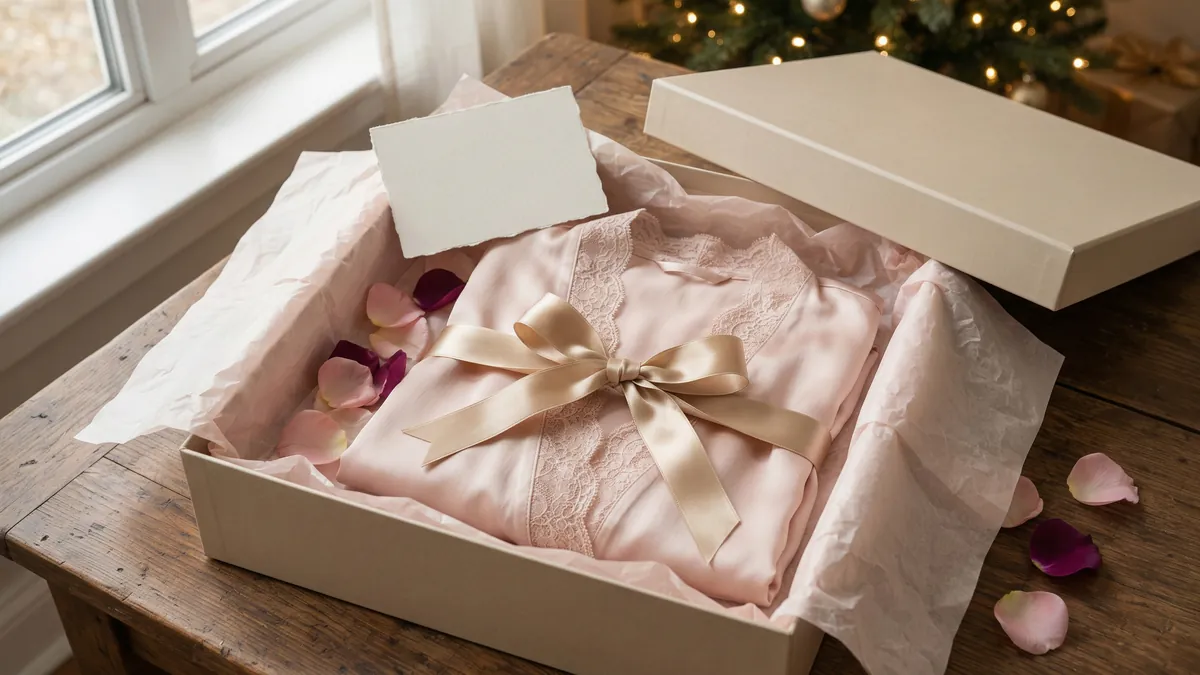
| Something new | The new life ahead | The dress, new lingerie, new shoes |
| Something borrowed | Happiness borrowed from a happily married friend or relative | A veil, a hair comb, a piece of jewellery lent for the day |
| Something blue | Faithfulness and love | A ribbon, embroidery or a pale blue garter |
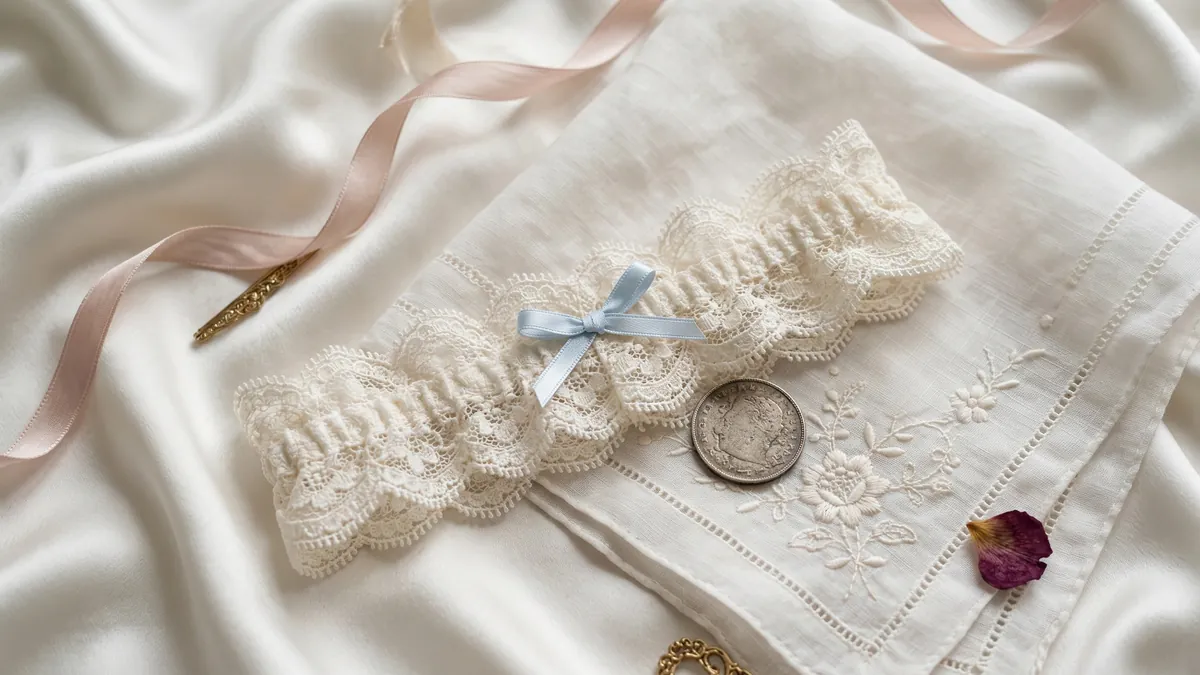
| A silver sixpence | Prosperity | An old coin kept in a shoe or a small pocket |
Meanings as traditionally given; families and regions tell them in their own ways.
Blue in particular carries a long association with purity and fidelity, which is why it became the colour of the promise rather than of the dress. Because the blue item was traditionally small and private, lingerie has always been one of its natural homes.
Ways to wear something blue
If you would like to include something blue, lingerie offers several discreet and charming possibilities. None of them need to be visible, and none of them change how the dress fits.
- A blue ribbon or bow sewn into the centre of a bra, inside a waistband or along the hem of a slip.
- Embroidered initials and the wedding date in blue thread, stitched inside the dress lining or on a garter.
- A pale blue garter, plain satin or edged with lace, the most familiar choice of all.
- A blue silk thread worked into a monogram on a handkerchief you carry through the day.
- A small blue stone on a pendant or an earring, if you prefer to keep the lingerie white.
A seamstress can add a ribbon or a few lines of embroidery in a short time. Ask for a soft silk or cotton thread rather than a stiff metallic one, so nothing scratches against the skin over a long day. A narrow satin ribbon about 3 mm wide sits flat and stays invisible under even a close fitting bodice.
The garter and its story
The garter is one of the oldest bridal customs still in use. In some countries the groom removes the garter during the reception and throws it to the guests, a custom with older roots that has changed shape many times. Today many couples choose differently: they keep the garter as a keepsake, wear it simply as their something blue, or skip the custom altogether. All of these are perfectly correct, and for couples of every kind the garter is now simply one option among many.
A garter worn for meaning is usually a soft band of satin or lace with gentle elastic, sitting comfortably just above the knee. It should never pinch or leave a mark. Try it on with the shoes and stockings you plan to wear, and walk around for a while: a garter that slides down by the first dance is easily fixed by a seamstress taking in the elastic by a centimetre.
Other customs close to the bride
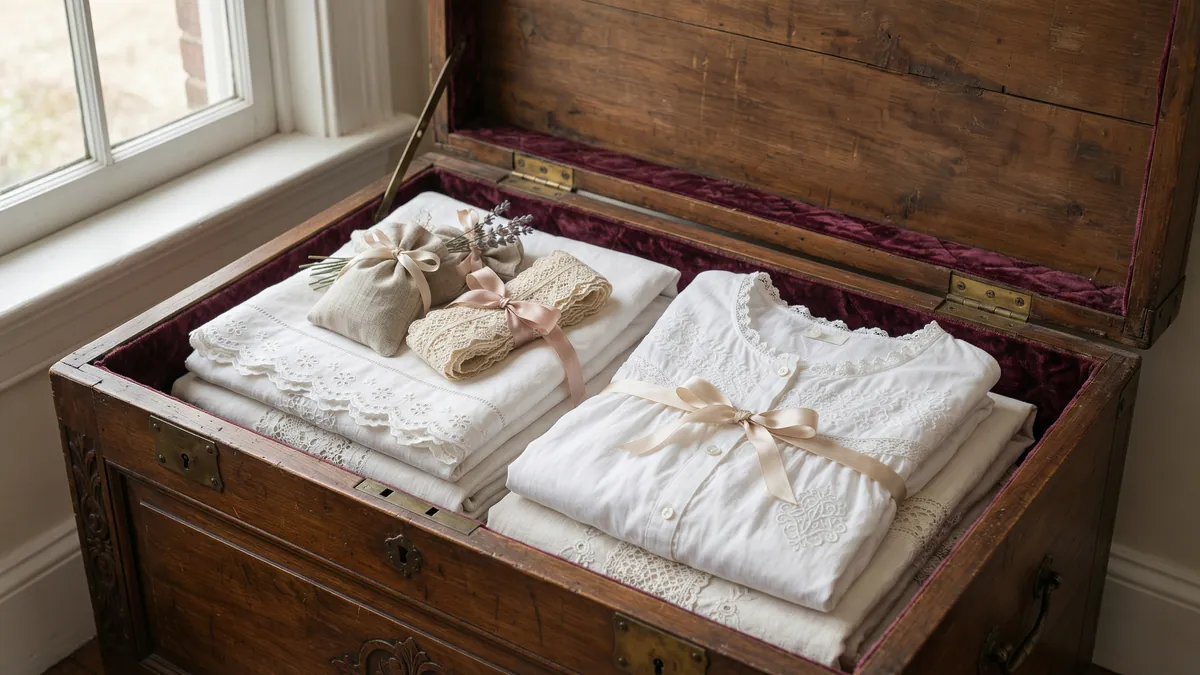
Several traditions share the same quiet intimacy. A bridal handkerchief, often of fine linen or cotton with a lace edge, was once embroidered with the bride’s initials and later passed down for christenings and the next wedding. The veil has been worn in many forms over the centuries and is still, for many, the moment when a dress becomes bridal. And the trousseau, the collection of linen, nightwear and lingerie gathered for married life, is a tradition rich enough for a story of its own.
Bridal traditions often live in the quiet details, close to the skin, carried for meaning rather than for show.
Making traditions your own
Traditions are an invitation, not a rulebook. Some couples follow the whole rhyme with care, others choose one line that speaks to them, and many weave in customs from their own families and cultures. Two brides might each carry something blue, a couple might share one borrowed piece, a groom might tuck an old coin into a shoe. Wear what feels right. The meaning comes from the person who lent the veil, the hands that stitched the date, the memory of whoever wore the lace before you.
If you inherit a delicate piece, such as an old garter or a lace handkerchief, let a seamstress check the seams and elastic before the day. Old elastic often perishes, and a gentle repair keeps the piece wearable without changing its character. Afterwards, wrap it in tissue paper and keep it somewhere dark and dry, ready for the next time it is borrowed.
Questions and answers
What does something borrowed mean?
It traditionally stands for happiness borrowed from a happily married friend or relative. A veil, a piece of jewellery or a handkerchief are common choices, and returning it after the wedding is part of the gesture.
Where does the silver sixpence come from?
It is the last line of the English rhyme, recorded in the Victorian era, and stands for prosperity. Many people today use an old coin of any kind tucked into a shoe.
Do I have to wear a garter?
Not at all. Some wear one as their something blue, some keep it as a keepsake, and many skip the custom. It is entirely your choice.
Can something blue be hidden?
Yes, and it usually is. A ribbon sewn into a bra or embroidery inside the dress lining is invisible to guests but with you all day.
Further reading in our network
- RoyalnisRoyal lifestyle
Royal weddings, court ceremonies and the long history of bridal traditions.
- PalianaJewellery and gemstones
Jewellery and gemstones, including heirloom pieces, pearls and blue stones for the wedding day.
Our articles are general information written with care. Sizes and conversions are guide values that differ between makers; for health questions please talk to a doctor or midwife.